
WEK-1650 IGRT Target Positioning and Correction Phantom
Mode:WEK-1650
Type:QA-Phantom
Contact: ken@hkmedqc.com
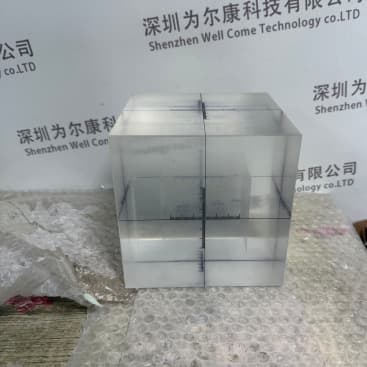
Image-Guided Radiation Therapy (IGRT) is an advanced radiotherapy technique that utilizes medical imaging equipment during treatment to capture images of the patient during a specific session. These images are then compared against the reference images from the original treatment plan to correct for positioning errors, thereby achieving superior therapeutic outcomes.

In the context of radiotherapy, patients undergo an initial localization procedure prior to treatment. Based on the images acquired during this localization, the target volume is delineated, and a comprehensive treatment plan is formulated to ensure that the radiation beams are precisely aimed at the tumor. Localization marks placed on the patient's skin and immobilization devices help ensure that the patient's position during each treatment session remains as consistent as possible with their position during the initial localization. However, factors such as changes in body posture and respiratory movements can cause slight shifts in the tumor's position, thereby compromising the precision of the treatment. IGRT addresses this challenge by employing imaging modalities—such as X-rays, CT scans, or MRIs—to acquire real-time information regarding positional changes in both the tumor and the surrounding normal tissues, either immediately before or during each radiotherapy session. Based on this real-time data, the radiation beam's delivery position is dynamically adjusted, thereby enhancing treatment precision and minimizing damage to adjacent healthy tissues. With the continued advancement of medical imaging technologies, IGRT is playing an increasingly pivotal role in the field of oncology.

1. The phantom is composed of solid water.
2. External dimensions: 150 mm × 150 mm × 150 mm.
3. Consists of two symmetrical halves (upper and lower).
4. A 2 mm tungsten carbide sphere is embedded at the center point (split equally between the upper and lower halves).
5. Features crosshair markings.
6. Precise dimensions: a crosshair mark is engraved at the center of each face; a high-density tungsten carbide sphere with a diameter of 2.00 mm is positioned at the geometric center of the cube, while steel spheres are placed peripherally according to the specified diagram dimensions.
7. The coordinates of the center point are P0 = (X0, Y0, Z0).
8. For the head phantom target region—a sphere with a diameter of φ = 50 mm—specifically the four points (marked in red) located on the boundary of the target region.
P1=(X0+14.43; Y0+14.43;Z0-14.43)
P2=(X0+14.43;Y0-14.43;Z0-14.43)
P3=(X0-14.43;Y0+14.43;Z0+14.43)
P4=(X0+14.43; Y0+14.43;Z0+14.43)
The actual placement of the inlays involves positioning points along the circumference of a sphere with a radius of 14.43 mm.
9. For the φ=100 mm spherical target volume within the body phantom, the four points (yellow dots) located on the boundary of the target volume
P1=(X0+14.43; Y0+14.43;Z0-14.43)
P2=(X0+14.43;Y0-14.43;Z0-14.43)
P3=(X0-14.43;Y0+14.43;Z0+14.43)
P4=(X0+14.43; Y0+14.43;Z0+14.43)
The actual placement of the inlays involves positioning points along the circumference of a sphere with a radius of 14.43 mm.
9. For the φ=100 mm spherical target volume within the body phantom, the four points (yellow dots) located on the boundary of the target volume
P5=(X0-28.87;Y0-28.87;Z0-28.87)
P6=(X0+28.87;Y0+28.87;Z0-28.87)
P7=(X0+28.87;Y0-28.87;Z0+28.87)
P8=(X0-28.87;Y0+28.87;Z0+28.87)
The actual placement of the inlays consists of points distributed along the circumference of a sphere with a diameter of φ=28.87 mm.
The actual placement of the inlays consists of points distributed along the circumference of a sphere with a diameter of φ=28.87 mm.
SAG: IGRT Target Positioning and Correction Phantom, IGRT Target Positioning Phantom,WEK-1650 IGRT Phantom